Lesson 213 – Based on ideas by: Randi Austin, Kindergarten Teacher
Overview
This activity gives children a delicious hands-on way to explore color mixing using white icing as paint and pretzel sticks as “brushes.” Students experiment with primary colors and discover how new colors are created.
Objectives
Students will:
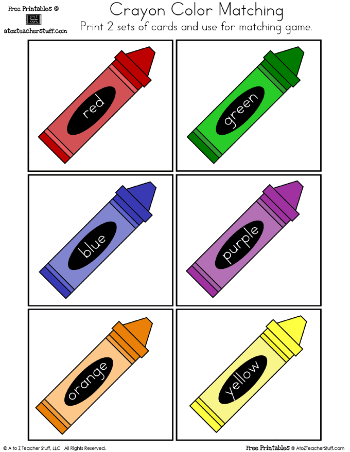
Explore and identify the three primary colors
Mix colors to create secondary and “new” colors
Use language to describe their discoveries
Strengthen fine motor skills
Enjoy a multisensory learning experience
Materials
White icing (1 can for about 10–12 students)
Food coloring: red, yellow, blue
Paper plates (one per child)
Pretzel sticks (3–5 per child)
Optional: wipes or damp cloths for cleanup
Optional: small index cards for “naming” their new colors
Plan
1. Prepare the Color Stations
Give each student a paper plate with three spoonfuls of white icing spaced apart.
Add:
1 drop of blue food coloring to the first spoonful
1 drop of red to the second
1 drop of yellow to the third
(Keep the drops small — icing colors quickly!)
2. Introduce Primary Colors
Briefly review:
Red
Yellow
Blue
Explain: “These are primary colors. We can mix them to make new colors.”
Invite predictions:
“What do you think will happen if we mix red and yellow?”
“What new color might blue and yellow make?”
3. Experiment & Mix
Give each child three pretzel sticks to use as stirrers.
Children mix:
Red + yellow → orange
Yellow + blue → green
Blue + red → purple
Encourage exploration:
“Try mixing just a little bit first.”
“Try mixing more color to make it darker.”
“Create a swirl—what does it look like?”
Students may also combine all three colors to see what happens (usually brown!).
4. Name Their New Colors
Children LOVE this step:
Have them “invent” their own color names and record them on small index cards.
Examples:
“Sunset Pink”
“Monster Green”
“Blueberry Swirl”
This reinforces creativity and vocabulary.
5. Taste Test
Allow students to sample their color creations once they are finished mixing.
This is a controlled, fun reward — and keeps kids excited for the activity.
6. Clean Up
Provide wipes or damp cloths for quick cleanup of food coloring and icing.
Teacher Notes
This activity is perfect for introducing science vocabulary like mix, blend, combine, lighter, darker, shade, tint.
It’s a strong sensory activity (touch, sight, taste).
Works VERY well during a colors unit, before holiday baking activities, or as a Friday fun activity.
Extensions
Color graphing: Graph which new color students liked best.
Literacy tie-in: Read Mouse Paint or White Rabbits’ Color Book.
Math tie-in: Compare “how many drops” changes the shade.